Digital systems
Project-based learning, innovative technologies and interdisciplinary work – your degree programme for the digital future!
Project-based learning
The focus is on practically-oriented projects. These foster technical expertise, problem-solving skills and teamwork. Students develop creative solutions to real-world challenges, work within agile processes and hone their ability to innovate.
Innovative topics
The degree programme provides knowledge of artificial intelligence, embedded systems, the Internet of Things and networked systems. Students learn how to apply modern technologies in industry and use them to develop sustainable solutions.
Entrepreneurship
As well as technology, the programme focuses on entrepreneurial thinking. Students learn how to turn ideas into business models, identify market potential and structure innovation projects in a commercially viable way.
Interdisciplinary
The combination of electrical engineering, computer science and digitalisation provides an in-depth understanding of complex systems. Technological solutions are developed with a focus on functionality, sustainability and practical applicability – whilst always taking their social relevance into account.
Soft skills included
In addition to technical abilities, the programme fosters communication, teamwork, project management and analytical thinking – all of which are essential in dynamic, interdisciplinary working environments.
Personalised specialisation, hardware-software integration, practically-oriented project-based learning
Details
| Conclusion: bachelor's degree | Type of study: Full-time | department: Dept 04 |
| Start of studies: Winter | standard period of study: 7 semesters (full-time) | teaching language: German (elective modules may be taught in English) |
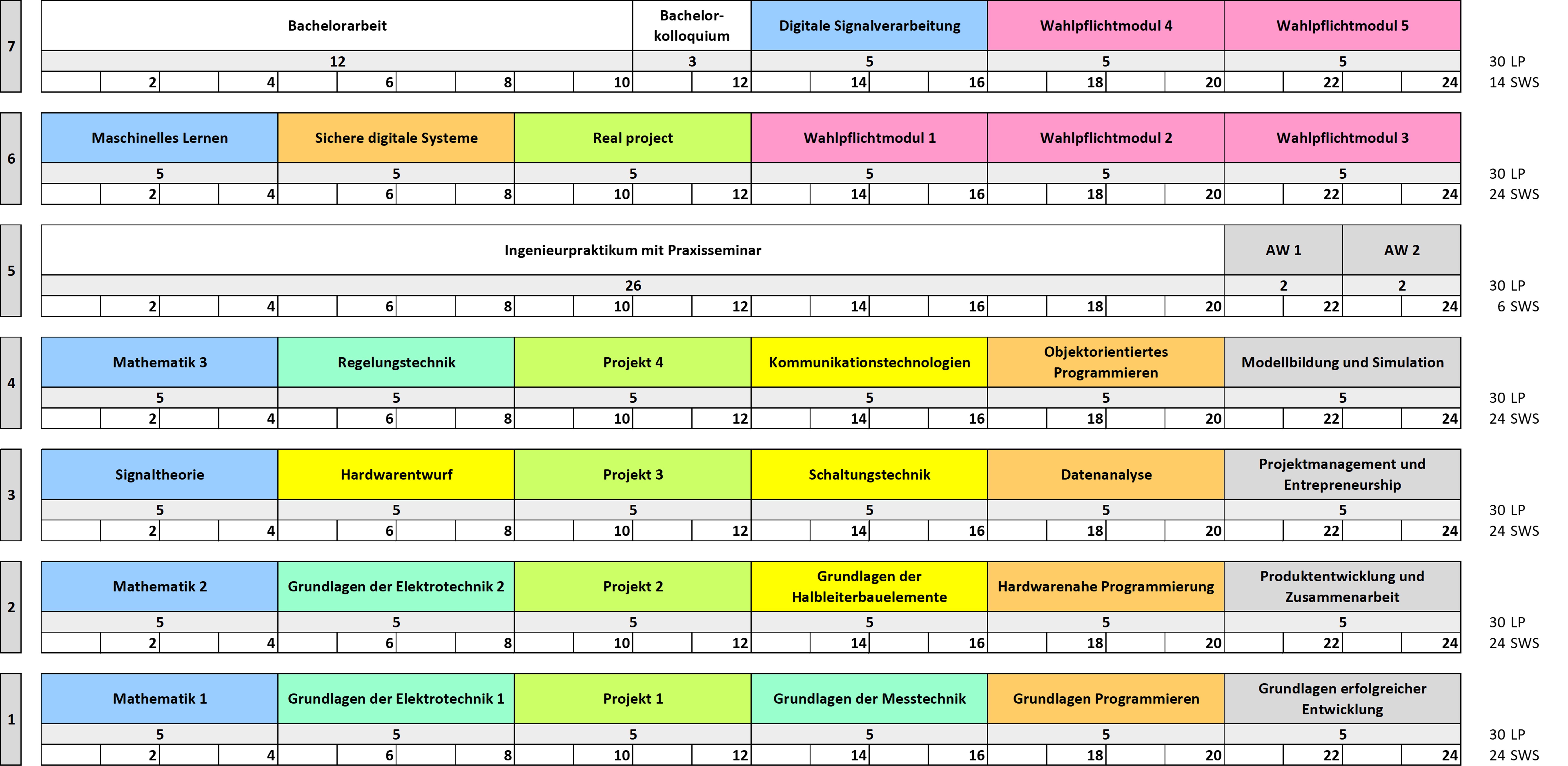
| course timetable | Structure of the degree programme |
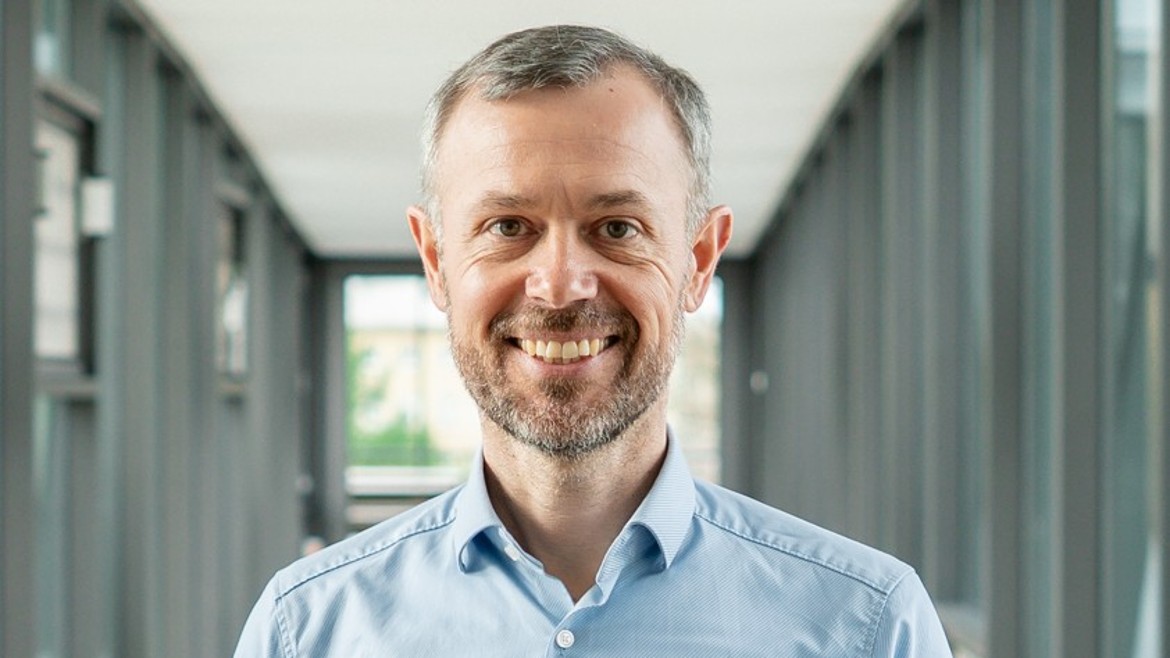
“The Digital Systems degree programme offers an interdisciplinary approach that brings together digital hardware development and software programming. From day one, students work together on projects addressing real-world societal challenges. The combination of theory, practical experience and soft skills gives students the perfect start to the digital future.”
Gerhard Schillhuber,
Head of Degree Programme
FAQs
Digital systems are shaping the world of tomorrow – whether in autonomous vehicles, connected energy systems or smart medical technology. The degree programme provides in-depth knowledge of digital hardware and software development – from programming and circuit board design, through the Internet of Things (IoT) and embedded systems, to artificial intelligence and machine learning.
The focus is on a project-based approach to learning: each semester, students tackle real-world societal challenges in interdisciplinary teams. In doing so, they acquire not only technical expertise but also methodological and social skills such as problem-solving, teamwork and intercultural communication.
Practical
Orientation Seven semesters, a compulsory practical semester (5th semester), modern laboratories, makerspaces and continuous project work make this degree programme particularly practice-oriented. From the very first semester, students apply theory to real-world development projects. From the sixth semester onwards, compulsory elective modules are available, allowing students to set their own individual specialisations.
Programme Profile
The programme combines Computer Science and Electrical Engineering in an interdisciplinary framework, making it ideal for tech-savvy, team-oriented young people who wish to play an active role in the digital Transformation. The development of self-directed learning skills and a high degree of personal responsibility provide the best possible preparation for a dynamic working environment.
Are you interested in technology and keen to understand how digital systems are changing our world? Do you enjoy tinkering, think analytically and like working in a team? If so, you already meet key requirements for the ‘Digital Systems’ degree programme.
Key qualities include:
An affinity for technology and a sense of curiosity: You enjoy understanding, experimenting with and developing things – whether in software or hardware.
A basic understanding of maths and the natural sciences: Knowledge of maths, physics, computer science and electrical engineering will help you get started.
Problem-solving mindset: You enjoy analysing problems and systematically seeking solutions.
Teamwork and communication: In the many projects, you’ll work closely with others – openness and the ability to cooperate are crucial here.
Self-organisation and initiative: You’re good at organising your own work, are keen to take on responsibility and like to think outside the box.
Interest in societal challenges: You don’t just want to develop technology, but also make a meaningful difference – for example, in the fields of the environment, health or mobility.
Even if you already have practical experience – e.g. through your own maker projects or technical training – this is an advantage, but not a prerequisite.
In short: if you recognise yourself in this description, ‘Digital Systems’ is exactly the right choice for you.
The degree programme spans seven semesters and follows a clearly structured, practice-oriented curriculum:
1st and 2nd semesters – Foundational studies:
You begin with a thorough STEM education: mathematics, electrical engineering, computer science, and the fundamentals of software development and measurement technology form the foundation. At the same time, you will already be applying your knowledge in project work.
3rd and 4th semesters – Specialisation phase:
The specialisation phase focuses on key technologies such as signal processing, hardware design, data analysis, communications technologies and machine learning. Here, too, you will work continuously on interdisciplinary projects that combine technical, methodological and social skills.
5th semester – Practical semester:
In the fifth semester, you’ll gain real-world professional experience at a company of your choice. Here, you’ll apply the knowledge you’ve acquired so far in a real-world working environment – ideal for gaining perspective and launching your career.
6th and 7th semesters – Specialisation and graduation:
You’ll choose from a wide range of compulsory elective modules to suit your interests and career goals. In a ‘Real Project’, you will work on a real-world task from industry or research. The degree programme concludes with a Bachelor’s thesis and a colloquium.
International focus:
The 5th and 6th semesters are designated as mobility windows for a semester or internship abroad. All credits can be recognised via a Learning Agreement.
Course timetable
Admitted students will receive further information on enrolment with their admission letter